
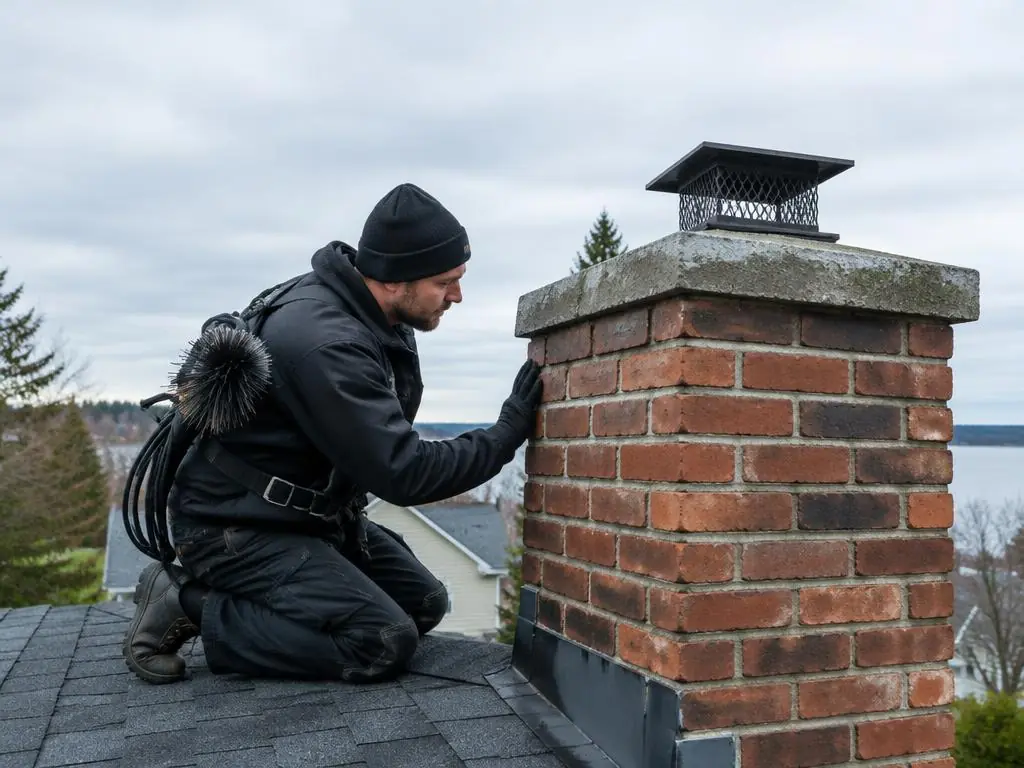
Chimney
Creosote Removal in Ontario
Understanding Creosote Buildup
Creosote deposits can be loose and sooty, flaky or tar like, or hard and glazed. Their appearance reflects fuel moisture, combustion and flue temperatures; they do not always develop in a neat sequence. Light deposits often respond to brushing. Hardened glaze resists ordinary brushes and needs assessment of both deposit and liner condition before choosing a treatment. A damaged clay liner or listed factory built chimney can limit which tools are appropriate, so aggressive removal is not automatically the best solution.
Because glazed creosote behaves differently from ordinary buildup, HeatNest treats removal as an assessment first job rather than a one size approach. We look at the deposit thickness, texture and how it reacts to a test pass before deciding whether rotary tools, chemical treatments formulated for creosote, or a combination is the right path. Glazed buildup is sometimes stubborn enough that full removal takes more than one visit.
Service Inclusions
- ✓ Creosote assessment
- ✓ Rotary removal
- ✓ Glazed creosote treatment
- ✓ Burning advice
Typical price range
$350 to $2,500
Typical Ontario price range before tax. Your actual price depends on your equipment, parts and access, and is confirmed after we assess the job.
Get a tailored estimate →Signs Of Heavy Or Glazed Creosote
Shiny, hardened coating inside the flue
A glassy black or brown surface on the flue walls that does not flake when scraped is a sign of glazed creosote rather than ordinary soot buildup.
Flue won't come fully clean after a normal sweep
If routine brushing leaves visible residue behind after multiple passes, the deposit has likely progressed past the stage a standard brush can handle.
History of burning unseasoned or wet wood
Green or wet firewood burns cooler and produces more condensation in the flue, which speeds up creosote formation compared with dry, seasoned hardwood.
Chimney fire occurred or was suspected
A chimney fire is often fuelled by exactly this kind of heavy deposit, and any flue that has had one needs a thorough assessment before further use.
Our Removal Process
- 01
We examine the flue visually
And by feel where accessible, classifying the buildup from light soot to heavy glazed creosote before choosing a removal method.
- 02
Light to moderate deposits often respond to thorough
Brushing with the right rod and head combination matched to the liner material and flue diameter.
- 03
When brushing alone is not enough
Rotary cleaning tools or chemical treatments formulated specifically for creosote are used, matched to what the liner can safely handle.
- 04
If glazed deposits do not fully clear in one visit
We explain what remains, why it is stubborn, and what approach, including a follow up visit, might be needed.
What Affects Removal Scope
Severity of the creosote buildup
Light soot is quick to remove, while heavy glazed creosote requiring rotary tools or repeated treatment passes takes considerably more time and effort.
Liner material and condition
Different liners tolerate different removal methods, and a liner already showing wear limits how aggressively we can treat deposits without risking further damage.
Number of visits needed
Severely glazed creosote sometimes requires more than one treatment to fully break down, which affects the overall scope compared with a single visit job.
Removing deposits reduces combustible material in the flue, but it does not correct every cause of poor draft. Dry untreated wood, appropriate combustion air and appliance settings help slow recurrence. An oversized or cold flue may need attention alongside cleaning rather than progressively more aggressive scraping.
Why Creosote Removal Matters
Heavy and glazed creosote is the leading fuel source behind chimney fires, so treating it properly is a direct safety matter, not just a cleaning preference. We never promise a guaranteed full removal of glazed deposits in a single pass, because the material genuinely does not respond the same way every time, and forcing an aggressive method onto a liner that cannot handle it creates its own risk. Rotary tools and treatments are matched to the liner type, and we explain what remains afterward.
Reducing Future Buildup
Check a freshly split face with a moisture meter
Rather than relying only on storage time. Wood around 20 percent moisture or less is a useful target for ordinary wood burning appliances; follow the appliance manual for fuel requirements.
A fire that smoulders at low temperature condenses
More creosote in the flue than a well fed fire burning at a proper temperature.
Homes that burn wood as a primary heat source should
Have the flue checked more frequently than occasional weekend users to catch buildup before it glazes.
Methods Matched To The Liner
HeatNest assesses deposit texture and liner condition before proposing removal. Ask which method is suitable, whether follow up treatment may be needed and how remaining material or damaged liner sections will be documented before the appliance returns to use.
Honest deposit assessment
We classify buildup by stage before choosing a method, rather than assuming every flue needs the same aggressive treatment regardless of what is actually there.
Liner appropriate methods
Rotary tools and chemical treatments are matched to the liner material and condition so removal does not create new damage while clearing old deposits.
Straight talk on stubborn buildup
If glazed creosote will not fully clear in one visit, we say so directly instead of promising a guaranteed single pass result on material that resists it.
Creosote Questions Answered
+Can glazed creosote always be fully removed?
Not always in a single visit. Glazed creosote is hardened and stubborn, and while rotary tools and chemical treatments help significantly, severe cases sometimes need more than one treatment to fully clear.
+Why does my flue have creosote even though I burn regularly?
Burning frequency matters less than wood quality and fire temperature. Wet or unseasoned wood and smouldering, low temperature fires both speed up creosote formation regardless of how often you burn.
+Is creosote removal different from a regular chimney sweep?
Yes. A regular sweep handles light soot with standard brushing, while creosote removal addresses thicker, glazed deposits that need rotary tools or specialized treatments to break down.
+Can I remove creosote myself with chemical products?
Over the counter creosote treatments can help reduce buildup over time, but heavy or glazed deposits already in the flue typically need professional rotary tools and assessment to remove properly.
+How do I know if my creosote is glazed versus normal soot?
Glazed creosote looks shiny or tar like and does not flake off when brushed, while normal soot is matte black and comes away easily. A professional assessment confirms which you have.
+Will removing creosote stop chimney fires completely?
Removing existing buildup significantly reduces risk, but preventing future chimney fires also depends on burning seasoned wood and scheduling regular sweeps to catch new buildup early.
Ontario Wide Removal Service
HeatNest assesses creosote concerns in the Ontario communities listed below. Confirm appointment availability for your town and mention the appliance, previous sweep findings and any suspected chimney fire. Heavy glazed deposits may require a different scope from routine brushing.
Acton · Adjala Tosorontio · Ailsa Craig · Ajax · Angus · Arva · Aurora · Aylmer · Ayr · Barrie · Bolton · Bowmanville · Bradford · Brampton · Brantford · Brooklin · Burford · Burlington · Caledon · Cambridge · Clarington · Collingwood · Courtice · Delaware · Dorchester · Dutton · East Gwillimbury · East York · Enniskillen · Erin · Etobicoke · Exeter · Fort Erie · Georgetown · Georgina · Glencoe · Grimsby · Guelph · Halton Hills · Hamilton · Hensall · Ilderton · Ingersoll · Innisfil · Keswick · Kilworth · King City · Kitchener · Komoka · Lincoln · London · Lucan · Markham · Midland · Milton · Mississauga · Mitchell · Mitchell Corners · Mono · Mount Brydges · New Tecumseth · Newcastle · Newmarket · Niagara Falls · Niagara on the Lake · Nobleton · North York · Norwich · Oakville · Orangeville · Orillia · Oro Medonte · Orono · Oshawa · Ottawa · Parkhill · Pelham · Pickering · Port Colborne · Port Stanley · Puslinch · Richmond Hill · Scarborough · Schomberg · Scugog · Shedden · Smithville · Springwater · St. Catharines · St. Marys · St. Thomas · Stratford · Strathroy · Sutton · Thamesford · Thorndale · Thornhill · Thorold · Tillsonburg · Toronto · Tottenham · Tyrone · Unionville · Uxbridge · Vaughan · Wasaga Beach · Waterloo · Welland · Whitby · Whitchurch Stouffville · Woodstock
What customers say about our creosote removal
"Great communication, I got a heads up before arrival and a clear summary of the work afterwards."
"The technician showed up on time, explained exactly what was wrong and had everything working the same afternoon. No upselling, just honest work."
"Very knowledgeable and patient with my questions. I finally understand how my system works and what to watch for."
Book Creosote Removal
If your flue has stubborn buildup a regular sweep could not clear, call HeatNest at (289) 801-7262 for an honest assessment and the right removal approach for your chimney.