
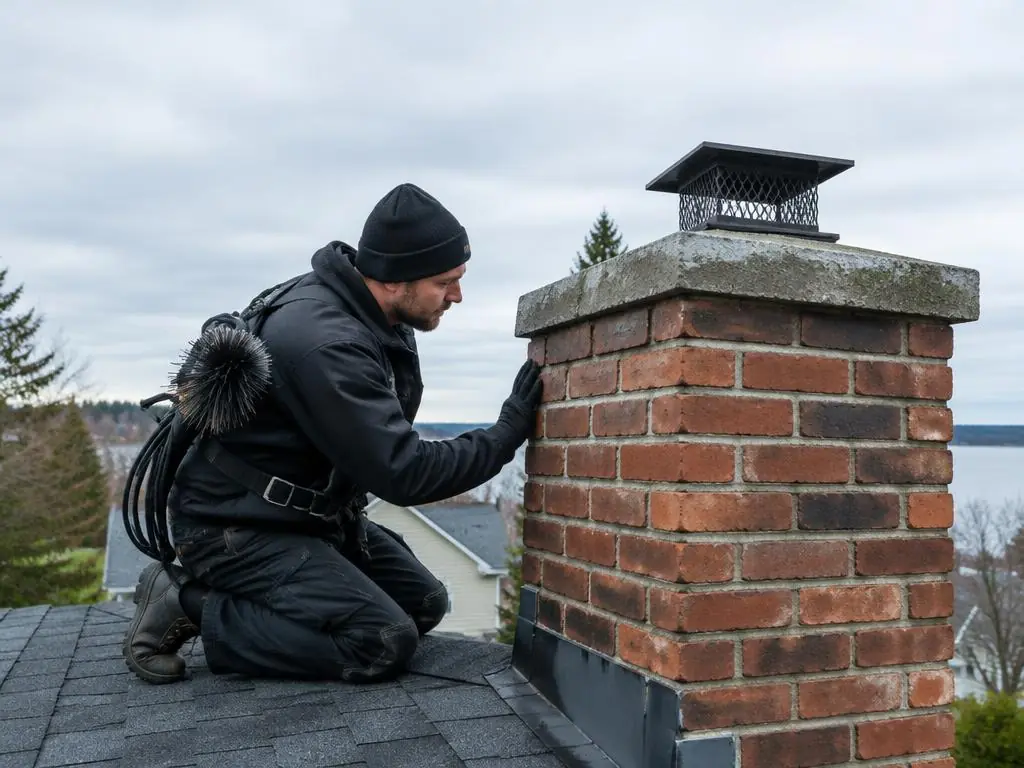
Chimney
Chimney Blockage Removal in Ontario
What Causes Chimney Blockages
Blockages build up from a handful of common causes: bird or animal nests, fallen bricks from a deteriorating liner, leaves and debris that blew in through a missing cap, or a liner section that has physically collapsed and pinched the flue shut. Some blockages are obvious from a look up the flue with a flashlight, while others sit higher up or around a bend where only a camera or specialized tools can confirm what is actually causing the restriction.
Clearing a blockage is only half the job. Once debris is removed, HeatNest inspects the liner condition in that area, because a blockage caused by fallen brick or a collapsed section points to an underlying structural problem that clearing debris alone will not fix. We do not tell a homeowner a chimney is safe just because the physical obstruction is gone if the liner itself is compromised and needs further repair before the flue should be used again.
Service Inclusions
- ✓ Blockage location
- ✓ Debris removal
- ✓ Camera check
- ✓ Draft test
Typical price range
$350 to $2,500
Typical Ontario price range before tax. Your actual price depends on your equipment, parts and access, and is confirmed after we assess the job.
Get a tailored estimate →Signs Of A Blocked Flue
Smoke backing up into the room
When smoke has nowhere to go but back into the house instead of up the flue, a blockage somewhere in the chimney is one of the most common causes.
Weak or no draft when starting a fire
A fire that struggles to pull air properly, even with the damper fully open, often points to a restriction higher up the flue.
Strange noises or debris falling into the firebox
Scratching, rustling or small pieces of debris landing in the firebox can indicate nesting material or deteriorating liner sections breaking loose above.
Carbon monoxide detector activating near the fireplace
A CO alarm near a fireplace or appliance connected to the chimney should be treated as urgent, since a blockage can force combustion gases back into living spaces.
Our Blockage Removal Process
- 01
We check from both the top
And the firebox, using a flashlight and camera where needed to pinpoint exactly where and what is causing the restriction in the flue.
- 02
Depending on the cause
This may mean removing nesting debris, clearing fallen brick fragments, or carefully extracting material without pushing debris further down the flue.
- 03
Once cleared, we examine that section of the liner closely, since fallen debris
Or a collapse often signals liner damage that needs separate repair attention.
- 04
We test draft after clearing the blockage
And we do not call the chimney safe to use if underlying liner damage still needs repair, even with the obstruction gone.
Why Blockages Are Urgent
A blocked flue can send smoke and carbon monoxide into the home. Stop using the connected appliance when obstruction is suspected; do not try repeated test fires. If a CO alarm sounds or anyone has dizziness, nausea or headache near a combustion appliance, get everyone outside and call 911. Debris removal alone is not a safety clearance. Damaged liners, active nests or other causes need resolution before the system returns to service.
Access, Debris And Underlying Repairs
Blockage location and accessibility
A blockage near the top of the flue clears faster than one lodged deep inside or around a bend that needs camera work and specialized extraction tools.
Cause of the blockage
Loose debris clears quickly, while a collapsed liner section or structural issue behind the blockage adds time for assessment and changes the overall scope of work.
Whether liner repair is needed afterward
If the blockage exposes a damaged liner section, addressing that separately affects the total project, since clearing debris alone will not resolve a structural cause.
Removing an obstruction is only one part of returning a flue to use. Fallen liner fragments can indicate ongoing damage, while nesting debris may require wildlife assessment first. Documenting the cause helps avoid treating recurring debris as an isolated cleaning problem and missing the repair behind it.
Preventing Future Blockages
A properly fitted cap stops leaves
Debris and nesting animals from entering the flue, preventing many of the most common blockage causes before they start.
A functioning CO detector near any fireplace
Stove or furnace connected to a chimney is an early warning system if a blockage ever develops unnoticed.
Regular sweeping catches debris buildup
And early liner deterioration before it progresses into a full blockage during the months you rely on the fireplace most.
Cause Before Cleanup
HeatNest scopes obstruction removal around the suspected cause and access available. Ask how the affected liner section will be checked afterward and what conditions would keep the appliance out of use even after visible debris has been cleared.
Thorough location before clearing
We confirm exactly where and what is causing the blockage using camera and visual methods before attempting removal, avoiding guesswork that could push debris further down.
Liner inspection built into every job
Clearing the obstruction always includes a look at the liner condition in that area, since blockages often point to a deeper structural cause.
Honest safety determination
We do not declare a chimney safe from a blockage alone. If liner repair is needed, we say so clearly before recommending the fireplace or appliance return to use.
Blockage Questions Answered
+What usually causes a chimney blockage?
Common causes include animal nests, leaves and debris entering through a missing cap, fallen bricks from a deteriorating liner, or a liner section that has physically collapsed and pinched the flue.
+Is a blocked chimney dangerous?
Yes. A blocked flue can force smoke and carbon monoxide back into the home instead of venting it outside, which is why we treat blockages paired with active fireplace use as urgent.
+How do you find a blockage without seeing it directly?
We use a combination of flashlight inspection from the firebox and camera work down the flue to pinpoint the exact location and likely cause of the restriction.
+Does clearing the blockage mean my chimney is fully safe?
Not automatically. We inspect the liner where the blockage occurred, since debris or collapse often points to structural damage that needs separate repair before the chimney is fully safe to use.
+Can I use my fireplace while waiting for a blockage to be cleared?
We recommend against it. Using a fireplace or appliance with a suspected blockage risks pushing smoke and carbon monoxide back into the home instead of venting properly outside.
+How long does blockage removal typically take?
Straightforward debris removal near the top of the flue can take under an hour, while deeper or structurally complicated blockages requiring camera work and liner assessment take longer.
Ontario Wide Service
HeatNest assesses blocked chimneys in North York, Toronto and listed Ontario communities. Confirm availability for your town and identify the connected appliance. Mention falling debris, recent masonry work or possible nesting, since these affect the assessment and removal scope.
Acton · Adjala Tosorontio · Ailsa Craig · Ajax · Angus · Arva · Aurora · Aylmer · Ayr · Barrie · Bolton · Bowmanville · Bradford · Brampton · Brantford · Brooklin · Burford · Burlington · Caledon · Cambridge · Clarington · Collingwood · Courtice · Delaware · Dorchester · Dutton · East Gwillimbury · East York · Enniskillen · Erin · Etobicoke · Exeter · Fort Erie · Georgetown · Georgina · Glencoe · Grimsby · Guelph · Halton Hills · Hamilton · Hensall · Ilderton · Ingersoll · Innisfil · Keswick · Kilworth · King City · Kitchener · Komoka · Lincoln · London · Lucan · Markham · Midland · Milton · Mississauga · Mitchell · Mitchell Corners · Mono · Mount Brydges · New Tecumseth · Newcastle · Newmarket · Niagara Falls · Niagara on the Lake · Nobleton · North York · Norwich · Oakville · Orangeville · Orillia · Oro Medonte · Orono · Oshawa · Ottawa · Parkhill · Pelham · Pickering · Port Colborne · Port Stanley · Puslinch · Richmond Hill · Scarborough · Schomberg · Scugog · Shedden · Smithville · Springwater · St. Catharines · St. Marys · St. Thomas · Stratford · Strathroy · Sutton · Thamesford · Thorndale · Thornhill · Thorold · Tillsonburg · Toronto · Tottenham · Tyrone · Unionville · Uxbridge · Vaughan · Wasaga Beach · Waterloo · Welland · Whitby · Whitchurch Stouffville · Woodstock
What customers say about our chimney blockage removal
"Tidy, quick and thorough. Everything was tested before they left and it's been running perfectly since."
"Booking was easy and the price matched what they told me on the phone. They cleaned up after themselves too."
"Called in the morning, had someone here by mid afternoon. Friendly, careful and professional from start to finish."
Clear Your Blocked Chimney
Suspect an obstruction? Keep the appliance off and call HeatNest at (289) 801-7262 for assessment.