
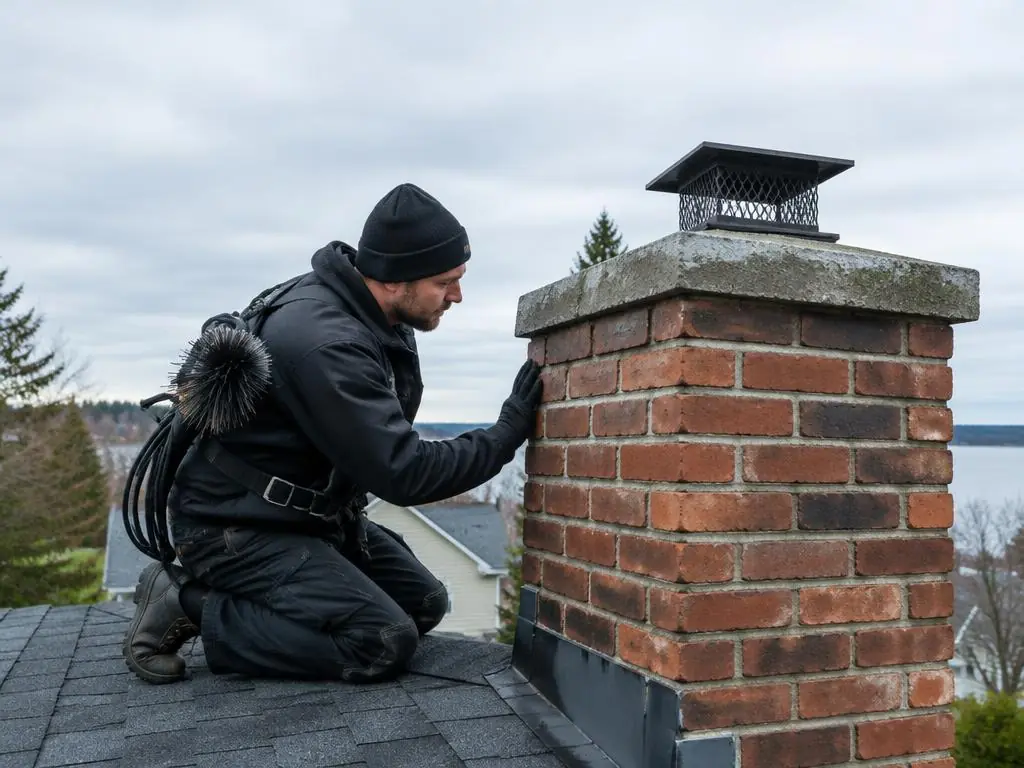
Chimney
Chimney Liner Installation in Ontario
Understanding Liner Systems
Chimney liners exist because unlined or deteriorated flues allow heat, moisture and combustion byproducts to reach masonry and nearby framing. A liner creates a continuous, sized passage matched to the connected appliance, whether that appliance burns wood, gas or oil. Masonry chimneys built decades ago were often constructed without a liner or with clay tile that has since cracked. Factory built listed chimney systems rely on manufacturer specified components that cannot be swapped with masonry hardware.
Selecting a liner means confirming fuel type, appliance btu output, connector size and required insulation, since an oversized or undersized passage affects draft and condensation. Not every stainless liner is rated for every fuel, and some products are built for gas only while others accommodate wood or multi fuel use. HeatNest technicians review the appliance, existing flue condition and clearances to framing before recommending a liner type. Any installation is documented against the applicable code and the manufacturer instructions for that specific product.
Service Inclusions
- ✓ Liner sizing
- ✓ Stainless steel liners
- ✓ Insert & stove relines
- ✓ Cap & connection
Typical price range
$2,500 to $6,000
Typical Ontario price range before tax. Your actual price depends on your equipment, parts and access, and is confirmed after we assess the job.
Get a tailored estimate →Warning Indicators
Visible Flue Deterioration
Cracked, spalling or missing tile sections inside a masonry flue reduce the barrier between combustion gases and surrounding structure.
Draft Or Backdraft Issues
Smoke entering the room, sluggish draft, or appliance shutdowns can indicate a flue sized or configured incorrectly for the connected appliance.
Corrosion Or Staining
Rust colored residue, white staining or pitted metal on an existing liner points to condensation from an undersized or unlined passage.
Appliance Or Fuel Change
Switching fuel type or replacing an appliance often changes venting requirements, since a liner sized for one setup may not suit another.
Cost Considerations
Liner Material And Diameter
Stainless steel, aluminum or insulated liner options vary in material cost depending on diameter and length required for the flue.
Flue Condition And Access
Additional masonry repair, offsets or difficult roof access can add labor beyond a straightforward straight run installation.
Appliance Connection Work
Connecting the liner to the appliance, adapters and any required cap or termination hardware factors into the overall scope.
A properly matched liner reduces the chance of condensation, corrosion and gas migration into living space by giving combustion byproducts a continuous, correctly sized path to the exterior. Masonry and factory built systems rely on different components, so choosing the right liner for the actual flue and appliance combination matters more than selecting the most commonly stocked product. Documentation of that match supports any future appliance or chimney work.
Installation Process
- 01
A technician examines the flue interior
Masonry condition, clearances and connected appliance before recommending a liner size or material.
- 02
Diameter, insulation needs
Diameter, insulation needs and fuel compatibility are matched against appliance specifications and applicable code requirements for the chimney type.
- 03
The liner is run through the flue
Connected to the appliance and secured according to the manufacturer instructions for that specific product.
- 04
Clearances, support
Clearances, support and termination are checked, and the completed installation is documented for the homeowner's records.
Safety Notes
Chimney liner work involves combustion byproducts, confined flue spaces and roof access, so it should not be treated as a casual project. An incompatible liner material or undersized diameter can allow condensation, corrosion or carbon monoxide to reach living space over time. Existing structural damage in a masonry chimney may need repair before a liner is installed, since lining alone does not correct cracked crowns or deteriorated mortar joints. Manufacturer requirements for factory built listed chimney systems specify particular replacement components, and mixing parts across systems can void those conditions. HeatNest technicians document clearances to combustibles, confirm fuel and appliance compatibility, and flag any damage found during inspection rather than covering it with a new liner.
Maintenance Guidance
Confirm the liner material
And rating are appropriate for wood, gas or oil rather than assuming any stainless liner works for every fuel.
Cracked crowns, loose mortar
Or spalling brick should be evaluated before a liner installation covers underlying structural issues.
Retaining appliance specifications
Retaining appliance specifications and the installed liner documentation helps with future service, inspection or appliance replacement decisions.
Our Approach
We evaluate liner installation as a compatibility question between fuel, appliance and chimney type. Masonry flues and factory built listed systems need different components. Diameter, insulation and existing damage should be assessed before selecting materials, rather than hiding defects behind a newly installed liner.
Compatibility First
Fuel type, appliance output and liner diameter are reviewed together before any product is recommended for installation.
Documented Inspection
Flue condition and clearances are recorded, so existing damage is identified rather than hidden beneath a new liner.
Manufacturer Alignment
Installations follow the applicable manufacturer instructions for the specific liner or factory built system components in use.
Common Questions
+Can any stainless liner work with any fuel type?
No. Liner materials and ratings vary by fuel, and a liner suited for gas is not automatically appropriate for wood or oil appliances. HeatNest confirms fuel compatibility during inspection before recommending a specific product.
+Are masonry and factory built chimney systems interchangeable?
They are not. Masonry flues and factory built listed systems use different components and clearances, and mixing parts between the two can affect performance and the manufacturer's stated conditions for that system.
+Does a new liner fix existing chimney damage?
Lining does not repair cracked crowns, deteriorated mortar or structural issues in a masonry chimney. Those conditions typically need separate repair before or alongside liner installation.
+How is liner diameter determined?
Diameter is based on the connected appliance output, fuel type and applicable code requirements rather than the existing flue opening alone, since an oversized or undersized liner affects draft and condensation.
+Does changing appliances affect the liner?
Switching fuel type or replacing an appliance can change venting requirements, so an existing liner may no longer be the correct size or material for the new setup and should be reviewed.
+What does HeatNest check before installation?
HeatNest reviews flue condition, clearances, fuel type and appliance specifications, and documents findings so the selected liner matches the actual system rather than a general assumption.
Service Coverage
From North York, HeatNest books liner assessments in the Ontario communities listed here. Confirm service availability for your town when calling. Have the connected appliance model, fuel type and any previous chimney report ready so compatibility can be discussed before materials are selected.
Acton · Adjala Tosorontio · Ailsa Craig · Ajax · Angus · Arva · Aurora · Aylmer · Ayr · Barrie · Bolton · Bowmanville · Bradford · Brampton · Brantford · Brooklin · Burford · Burlington · Caledon · Cambridge · Clarington · Collingwood · Courtice · Delaware · Dorchester · Dutton · East Gwillimbury · East York · Enniskillen · Erin · Etobicoke · Exeter · Fort Erie · Georgetown · Georgina · Glencoe · Grimsby · Guelph · Halton Hills · Hamilton · Hensall · Ilderton · Ingersoll · Innisfil · Keswick · Kilworth · King City · Kitchener · Komoka · Lincoln · London · Lucan · Markham · Midland · Milton · Mississauga · Mitchell · Mitchell Corners · Mono · Mount Brydges · New Tecumseth · Newcastle · Newmarket · Niagara Falls · Niagara on the Lake · Nobleton · North York · Norwich · Oakville · Orangeville · Orillia · Oro Medonte · Orono · Oshawa · Ottawa · Parkhill · Pelham · Pickering · Port Colborne · Port Stanley · Puslinch · Richmond Hill · Scarborough · Schomberg · Scugog · Shedden · Smithville · Springwater · St. Catharines · St. Marys · St. Thomas · Stratford · Strathroy · Sutton · Thamesford · Thorndale · Thornhill · Thorold · Tillsonburg · Toronto · Tottenham · Tyrone · Unionville · Uxbridge · Vaughan · Wasaga Beach · Waterloo · Welland · Whitby · Whitchurch Stouffville · Woodstock
What customers say about our chimney liner installation
"Booking was easy and the price matched what they told me on the phone. They cleaned up after themselves too."
"Called in the morning, had someone here by mid afternoon. Friendly, careful and professional from start to finish."
"Great communication, I got a heads up before arrival and a clear summary of the work afterwards."
Schedule Service
Chimney liner work depends on matching fuel, appliance and chimney type correctly. To schedule an inspection or discuss liner compatibility, contact HeatNest at (289) 801-7262.