
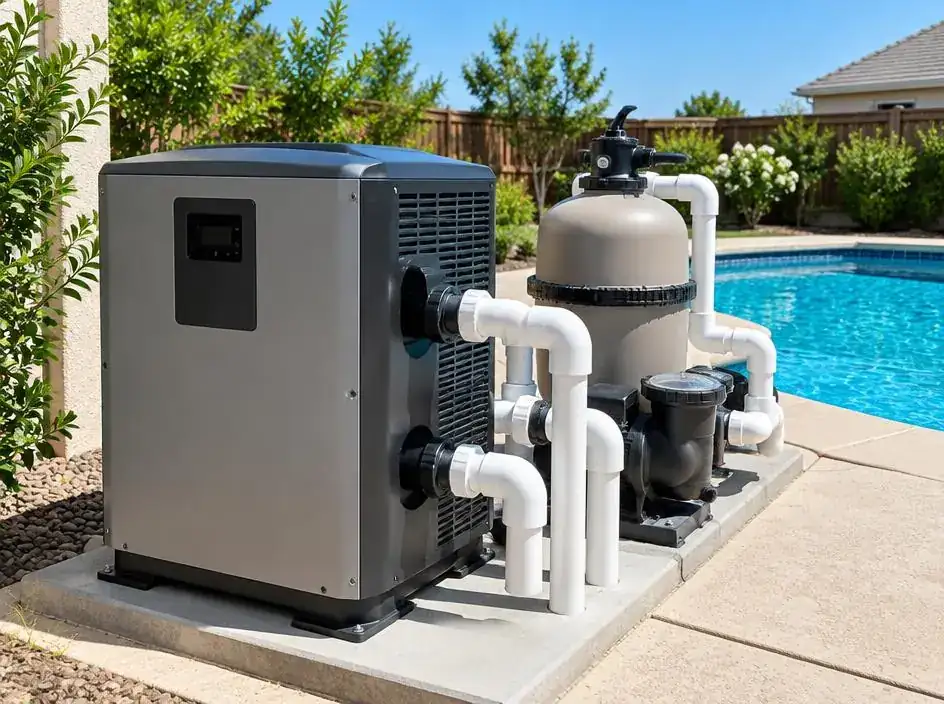
Pool Heater
Pool Heater Leaking Water in Ontario
Understanding Where Pool Heater Water Comes From
A pool heater leak does not automatically mean the heat exchanger has failed. Water can escape through a union, drain plug, header gasket, pressure switch connection, or cracked manifold, then travel along the cabinet before reaching the pad. Our technicians trace that path instead of judging the problem by the puddle alone. We ask whether the leak appears with the pump running, during heating, or even while the system is off. Those details help separate a circulation side leak from rainwater, drainage trouble, or condensation.
Equipment type matters during this inspection. A pool heat pump normally produces condensate while heating, but persistent water around a gas fired heater needs a different assessment.
Service Inclusions
- ✓ Leak source inspection
- ✓ Pool heater plumbing checks
- ✓ Heat exchanger assessment
- ✓ Repair or replacement guidance
Typical price range
$200 to $800
Typical Ontario price range before tax. Your actual price depends on your equipment, parts and access, and is confirmed after we assess the job.
Get a tailored estimate →Clues That Help Locate the Leak
Water appears when the pump starts
A drip that begins with circulation often points toward a pressurized plumbing connection or heater component. Tell us whether it stops immediately after shutdown or continues to drain.
Water emerges beneath the cabinet
Pooling under the casing can hide an internal leak. Rust streaks or mineral deposits provide clues, but opening panels while equipment is operating is not a safe diagnostic step.
A wet header or union
Moisture around the pipe connection may indicate a seal problem, damaged fitting, or cracked header. Avoid tightening plastic parts aggressively, especially if they are aged or visibly distorted.
Leak discovered after winter
Water appearing during spring startup can indicate freeze damage in a header or exchanger. Even a small visible drip deserves inspection before the heater returns to regular operation.
Protect Yourself Around Leaking Equipment
Keep the heater off if water is entering the cabinet or reaching electrical components. Do not remove covers, bypass safety controls, or attempt gas side repairs. Shut equipment down only from a dry, safe location, and keep people away from wet wiring. If you smell gas, leave the home and surrounding equipment area, then call the gas utility or 911 from a safe location. Do not restart equipment until it has been assessed.
First Steps After Finding Water
- 01
Turn heating off using the normal controls
Provided you can reach them safely without approaching wet electrical equipment.
- 02
If water is actively escaping from the heater
Stop the circulation pump safely. Do not close valves while the pump is running.
- 03
From a safe position
Photograph the wet area and record whether the leak occurred during circulation, heating, or shutdown.
- 04
Contact HeatNest with the model information
And symptoms. We inspect the source and explain the proposed repair before proceeding.
Repair Quote Factors
Leak location
An accessible union seal usually involves different labour and parts than an internal header or heat exchanger repair.
Equipment condition
Corroded fasteners, damaged adjacent components, and restricted access can increase the work needed to complete a sound repair.
Repair scope
Model specific parts, availability, and any underlying circulation or chemistry issue affect the quote and the repair versus replacement decision.
Our goal is to connect the visible symptom to a repair that addresses its cause. A new gasket will not solve a cracked header, and a replacement heater will not correct unsuitable water chemistry. We explain what we find, which components are affected, and whether further testing is needed before recommending that you invest in parts or new equipment.
Questions About Leaking Pool Heaters
+Can I keep using my pool heater if it leaks?
Keep heating off until the source is understood. Water inside the cabinet can affect electrical or combustion components. If there is active water loss, stop the pump safely as well. Continued pool circulation through a bypass requires a suitable existing arrangement and confirmation that it is safe.
+How can I tell a leak from condensation?
Heat pumps commonly shed condensate during operation. Gas heater behaviour depends on the design and operating conditions. Note whether water appears only during heating or whenever the pump runs, but do not rely on that observation alone. An inspection can establish whether a pressurized component is leaking.
+Does a leaking heat exchanger mean I need a new heater?
Not necessarily. We consider exchanger availability, the condition of the remaining equipment, and the work required for replacement. Extensive corrosion or multiple damaged components may favour a new heater. We also discuss possible causes, such as freezing or unsuitable chemistry, before recommending either route.
+Can you help with an urgent leak in North York?
Call HeatNest and describe whether water is spraying, entering the cabinet, or approaching electrical equipment. We can discuss the situation and current appointment availability. Keep affected equipment off while waiting. Do not attempt an internal repair simply to keep the pool heating.
+What information helps you prepare a repair quote?
Provide the make, model, approximate age, and clear photos taken without removing panels. Tell us when the leak starts and whether the heater was recently opened for the season. Final repair pricing depends on inspection findings, required parts, and access to the affected components.
+If replacement is needed, can I choose the same heater?
A similar unit may be suitable, but replacement still requires checking the installation requirements. Heater capacity, gas supply, electrical service, plumbing layout, clearances, and venting where applicable all matter. We review those conditions rather than assuming an existing installation suits every replacement model.
Practical Preparation Before Your Visit
Keep photos of the original puddle
Before it dries; they can help show its location and extent.
Have recent pool water test results available
Including pH and sanitizer readings.
Do not add leak sealing products unless the heater
Manufacturer explicitly permits them.
Arrange model specific winterization
Arrange model specific winterization so water is drained from vulnerable heater components.
Choose HeatNest for a Focused Inspection
HeatNest is a North York home heating, cooling, and gas company serving homeowners with practical equipment advice. For a leaking pool heater, we focus on clear diagnosis rather than assuming the largest component needs replacement. We ask useful questions before the visit and discuss access, equipment details, and the next steps so you know what the inspection is intended to establish.
Symptom led inspection
We use the timing and location of the leak to guide inspection rather than treating every puddle as exchanger failure.
Equipment specific checks
We consider the heater type and model before interpreting condensation, selecting parts, or discussing whether a repair is appropriate.
Clear repair scope
We explain the identified fault and proposed work so you can evaluate a quote with the relevant details in hand.
Attention to contributing causes
We consider freeze damage, circulation, and water chemistry where relevant, rather than focusing exclusively on the component that is leaking.
Serving North York and Ontario Communities
Based in North York, HeatNest serves Toronto, the GTA, and Ontario communities. Contact us with your location and pool heater details to confirm service availability. Access to the equipment pad, the heater type, and the symptoms help us prepare for a useful inspection visit.
Acton · Adjala Tosorontio · Ailsa Craig · Ajax · Angus · Arva · Aurora · Aylmer · Ayr · Barrie · Bolton · Bowmanville · Bradford · Brampton · Brantford · Brooklin · Burford · Burlington · Caledon · Cambridge · Clarington · Collingwood · Courtice · Delaware · Dorchester · Dutton · East Gwillimbury · East York · Enniskillen · Erin · Etobicoke · Exeter · Fort Erie · Georgetown · Georgina · Glencoe · Grimsby · Guelph · Halton Hills · Hamilton · Hensall · Ilderton · Ingersoll · Innisfil · Keswick · Kilworth · King City · Kitchener · Komoka · Lincoln · London · Lucan · Markham · Midland · Milton · Mississauga · Mitchell · Mitchell Corners · Mono · Mount Brydges · New Tecumseth · Newcastle · Newmarket · Niagara Falls · Niagara on the Lake · Nobleton · North York · Norwich · Oakville · Orangeville · Orillia · Oro Medonte · Orono · Oshawa · Ottawa · Parkhill · Pelham · Pickering · Port Colborne · Port Stanley · Puslinch · Richmond Hill · Scarborough · Schomberg · Scugog · Shedden · Smithville · Springwater · St. Catharines · St. Marys · St. Thomas · Stratford · Strathroy · Sutton · Thamesford · Thorndale · Thornhill · Thorold · Tillsonburg · Toronto · Tottenham · Tyrone · Unionville · Uxbridge · Vaughan · Wasaga Beach · Waterloo · Welland · Whitby · Whitchurch Stouffville · Woodstock
Related
Related services
What customers say about our pool heater leaking water
"Called in the morning, had someone here by mid afternoon. Friendly, careful and professional from start to finish."
"Great communication, I got a heads up before arrival and a clear summary of the work afterwards."
"The technician showed up on time, explained exactly what was wrong and had everything working the same afternoon. No upselling, just honest work."
Request Your Pool Heater Leak Quote
Call HeatNest at (289) 801-7262 to discuss pool heater leaking water and request a quote. Share your location, equipment model and symptoms so we can prepare for the visit.