
HVAC
Heating System Installation in Ontario
Planning Your Heating System Installation
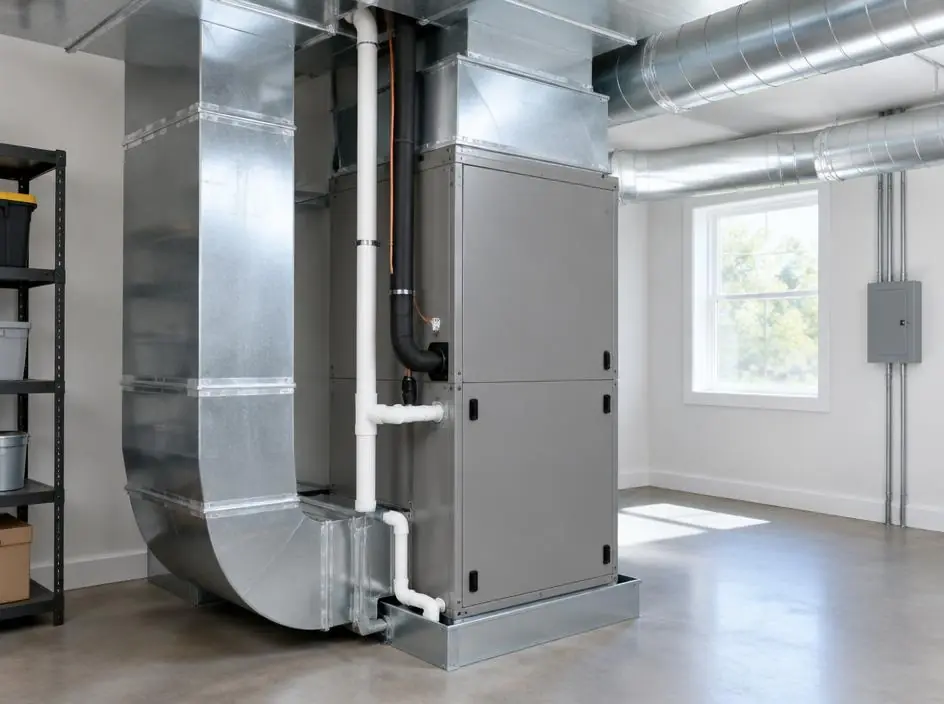
We begin by understanding what your home actually needs to stay comfortable. Floor area matters, but insulation, window condition, air leakage, ceiling height, and exposed walls also affect heating demand. A heat loss calculation helps guide equipment selection rather than relying on the old furnace's capacity. Oversized equipment can cycle frequently, while undersized equipment may struggle during cold weather. We also review your existing ductwork or hydronic distribution, because installing a larger appliance will not correct restricted airflow or an underlying distribution problem.
The right installation plan depends on the heating technology and the space available.
Service Inclusions
- ✓ Home heating load assessment
- ✓ Furnace and heat pump planning
- ✓ Ductwork and venting review
- ✓ Startup testing and homeowner walkthrough
Typical price range
$8,000 to $16,000
Typical Ontario price range before tax. Your actual price depends on your equipment, parts and access, and is confirmed after we assess the job.
Get a tailored estimate →Factors That Shape Your Quote
Equipment and system choice
Furnace, boiler, heat pump, and combined system installations involve different equipment, controls, and supporting components.
Site modifications
Duct alterations, vent routing, gas piping changes, electrical upgrades, and condensate drainage can affect the installation scope.
Access and project requirements
Tight mechanical rooms, difficult removal routes, outdoor mounting needs, and applicable permits or inspections influence the quoted work.
Good installation planning addresses the connections that determine everyday performance. Correct sizing, suitable airflow, coordinated controls, and accessible maintenance points all matter after the equipment is running. We focus on those details so you can compare proposals by scope, not just the appliance description. That makes it easier to understand what your home needs and where additional work has a practical purpose.
From Assessment to Startup
- 01
We review heating history
Measure relevant site conditions, and evaluate heat loss, distribution, utilities, and installation access.
- 02
We explain suitable equipment
Required modifications, control options, removal arrangements, and applicable permit or inspection requirements.
- 03
We remove agreed equipment
Complete the planned connections, and address venting, drainage, electrical, and distribution requirements as applicable.
- 04
We check system operation
Verify relevant settings, and show you thermostat functions, maintenance access, and shutdown procedures.
Reasons to Consider a New System
Replacement is becoming practical
Recurring repairs, deteriorating components, and inconsistent operation can justify comparing replacement options. We assess the existing system before recommending installation, especially when a repair could still address the problem.
Your renovation changes heating demand
An addition, finished basement, or major insulation upgrade can change equipment requirements. Review heating capacity and distribution before construction closes off access to ducts, piping, wiring, or vent routes.
You want a different heating approach
Switching from a furnace to a heat pump, or combining them, requires more than equipment selection. Electrical service, winter capacity, duct compatibility, and control coordination all need review.
Rooms never heat evenly
Persistent temperature differences deserve investigation before replacement. Restricted returns, duct leakage, poor balancing, or building heat loss may need correction alongside the new equipment to improve comfort.
Safe Connections and Operating Checks
Heating installation involves fuel, electricity, hot surfaces, and sometimes refrigerant, so connection work is not a homeowner task. We assess relevant clearances, vent terminations, drainage, and service access as part of planning. For fuel burning equipment, startup checks include combustion and venting checks appropriate to the appliance. Keep carbon monoxide alarms maintained according to their instructions. If you smell gas, leave the home and call the gas utility or 911 from outside.
Choose HeatNest for Home Specific Planning
At HeatNest, we approach installation as a home specific project. We ask about comfort problems, inspect the existing setup, and explain the reasoning behind our recommendations. Our North York base gives homeowners a local point of contact for planning and questions. We aim to leave you with clear operating instructions and an understanding of the system installed in your home.
Sizing based on the home
We consider building heat loss and distribution conditions instead of assuming the old equipment's capacity is the correct replacement size.
Visible project scope
We identify supporting work early, including access, drainage, controls, and utility connections, so you can review what the installation includes.
Equipment compatibility
We evaluate proposed equipment against your ductwork, utilities, and operating needs rather than choosing by brand name or capacity alone.
Practical handover
We explain thermostat operation, filter access where applicable, routine maintenance needs, and warning signs that should prompt a service call.
Prepare Your Home for Installation
Tell us which rooms feel cold
And whether the problem changes with wind, outdoor temperature, or closed interior doors.
Keep the mechanical room
And equipment removal route accessible, and discuss any finished surfaces that need protection.
Ask whether the quote includes thermostat changes
Disposal, venting alterations, electrical work, and required inspections.
Keep equipment manuals
Keep equipment manuals and commissioning records together, and follow the maintenance schedule for your installed system.
Serving North York and Surrounding Communities
Based in North York, HeatNest serves homeowners in Toronto, the GTA, and Ontario communities. Contact us with your location and project details to confirm installation availability. We discuss travel, site access, and assessment scheduling before arranging the next step for your home.
Acton · Adjala Tosorontio · Ailsa Craig · Ajax · Angus · Arva · Aurora · Aylmer · Ayr · Barrie · Bolton · Bowmanville · Bradford · Brampton · Brantford · Brooklin · Burford · Burlington · Caledon · Cambridge · Clarington · Collingwood · Courtice · Delaware · Dorchester · Dutton · East Gwillimbury · East York · Enniskillen · Erin · Etobicoke · Exeter · Fort Erie · Georgetown · Georgina · Glencoe · Grimsby · Guelph · Halton Hills · Hamilton · Hensall · Ilderton · Ingersoll · Innisfil · Keswick · Kilworth · King City · Kitchener · Komoka · Lincoln · London · Lucan · Markham · Midland · Milton · Mississauga · Mitchell · Mitchell Corners · Mono · Mount Brydges · New Tecumseth · Newcastle · Newmarket · Niagara Falls · Niagara on the Lake · Nobleton · North York · Norwich · Oakville · Orangeville · Orillia · Oro Medonte · Orono · Oshawa · Ottawa · Parkhill · Pelham · Pickering · Port Colborne · Port Stanley · Puslinch · Richmond Hill · Scarborough · Schomberg · Scugog · Shedden · Smithville · Springwater · St. Catharines · St. Marys · St. Thomas · Stratford · Strathroy · Sutton · Thamesford · Thorndale · Thornhill · Thorold · Tillsonburg · Toronto · Tottenham · Tyrone · Unionville · Uxbridge · Vaughan · Wasaga Beach · Waterloo · Welland · Whitby · Whitchurch Stouffville · Woodstock
Questions Before You Replace Your Heating
+How do you determine the right heating system size?
We use home specific heat loss information and assess the distribution system. Insulation, windows, air leakage, and exposed surfaces influence demand. For heat pumps, we also consider capacity at cold outdoor temperatures and how supplemental heat will operate, rather than relying solely on nominal equipment capacity.
+Can we stay home during heating system installation?
Often you can, but expect noise, equipment movement, and an interruption to heating. Electrical or gas service may also need temporary isolation. We discuss access and scheduling beforehand, including whether cold weather or household needs make temporary arrangements advisable while the system is disconnected.
+Does a new furnace require new ductwork?
Not automatically. Existing ducts may remain if their condition and capacity suit the proposed equipment. We check supply and return arrangements and identify restrictions. Some projects need transition fittings, return air improvements, or targeted duct changes rather than replacement of the entire duct system.
+Can a heat pump replace my gas furnace?
It may be suitable, depending on your home's heating demand, electrical capacity, and the selected equipment's cold weather performance. Some homes suit an all electric arrangement; others benefit from retaining gas backup. We compare the installation requirements and explain how each proposed setup would handle colder conditions.
+What should a heating installation quote include?
Look for clearly identified equipment, removal work, connection changes, controls, startup checks, and applicable permit or inspection responsibilities. Ask about exclusions, especially electrical upgrades and concealed conditions. We encourage reviewing the complete scope so the quote describes what is needed to put the system into service.
+What if my heating has already stopped working?
Call us to discuss the symptoms and scheduling availability. A breakdown does not automatically mean replacement is necessary; diagnosis may reveal a repairable fault. If installation is appropriate, we explain the required assessment and preparation rather than selecting equipment before checking your home's requirements.
Related
Related services
What customers say about our heating system installation
"Booking was easy and the price matched what they told me on the phone. They cleaned up after themselves too."
"Called in the morning, had someone here by mid afternoon. Friendly, careful and professional from start to finish."
"Great communication, I got a heads up before arrival and a clear summary of the work afterwards."
Request Your Installation Quote
Planning Heating System Installation or replacing equipment that no longer suits your home? Call HeatNest at (289) 801-7262 to request a quote. Tell us your location, current heating type, and comfort concerns so we can arrange an assessment and discuss a practical installation plan.